Millenium Curie-1
2018
-
2019
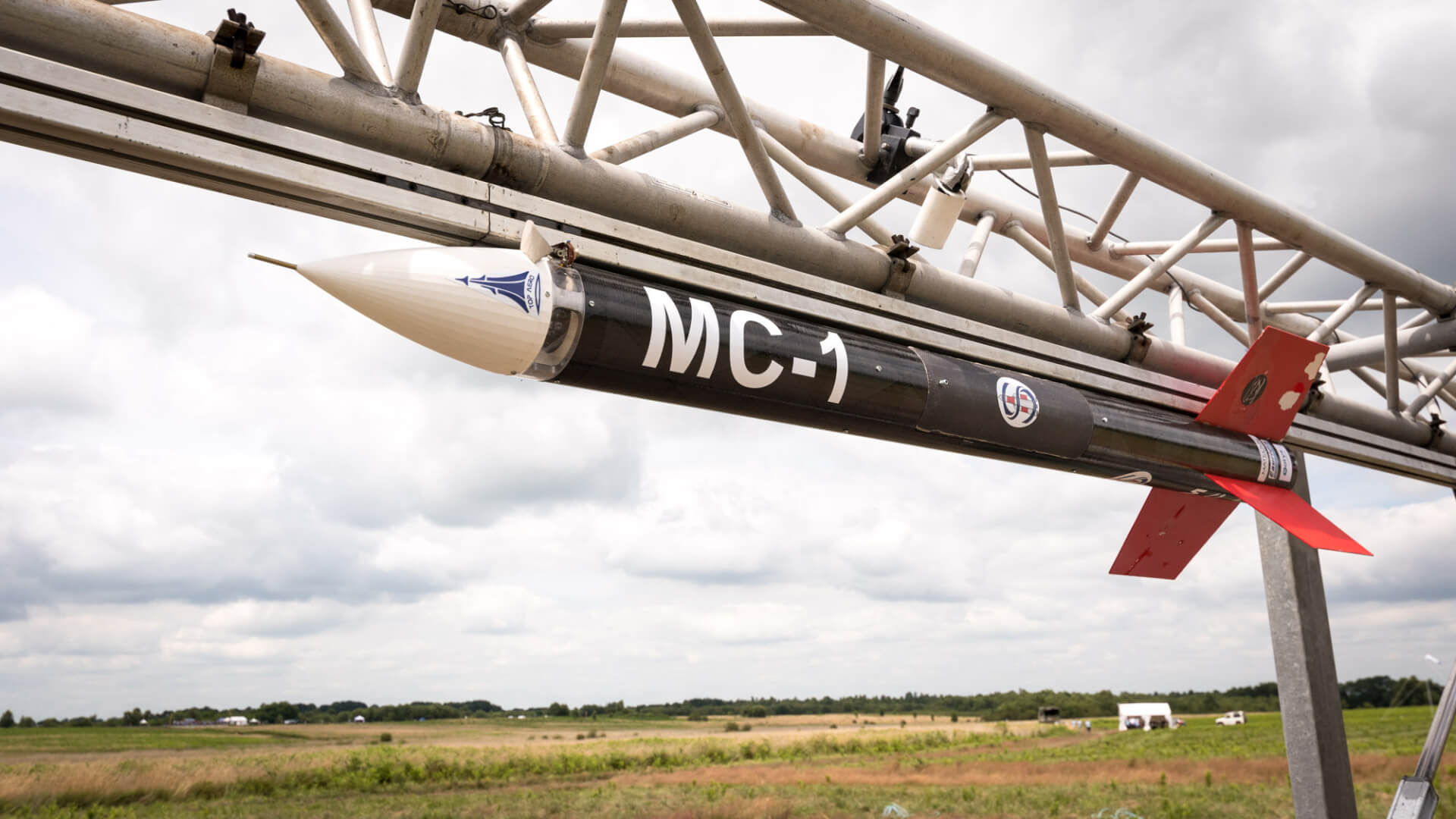
MC-1, for "Millenium-Curie-1" was our student body's first project.
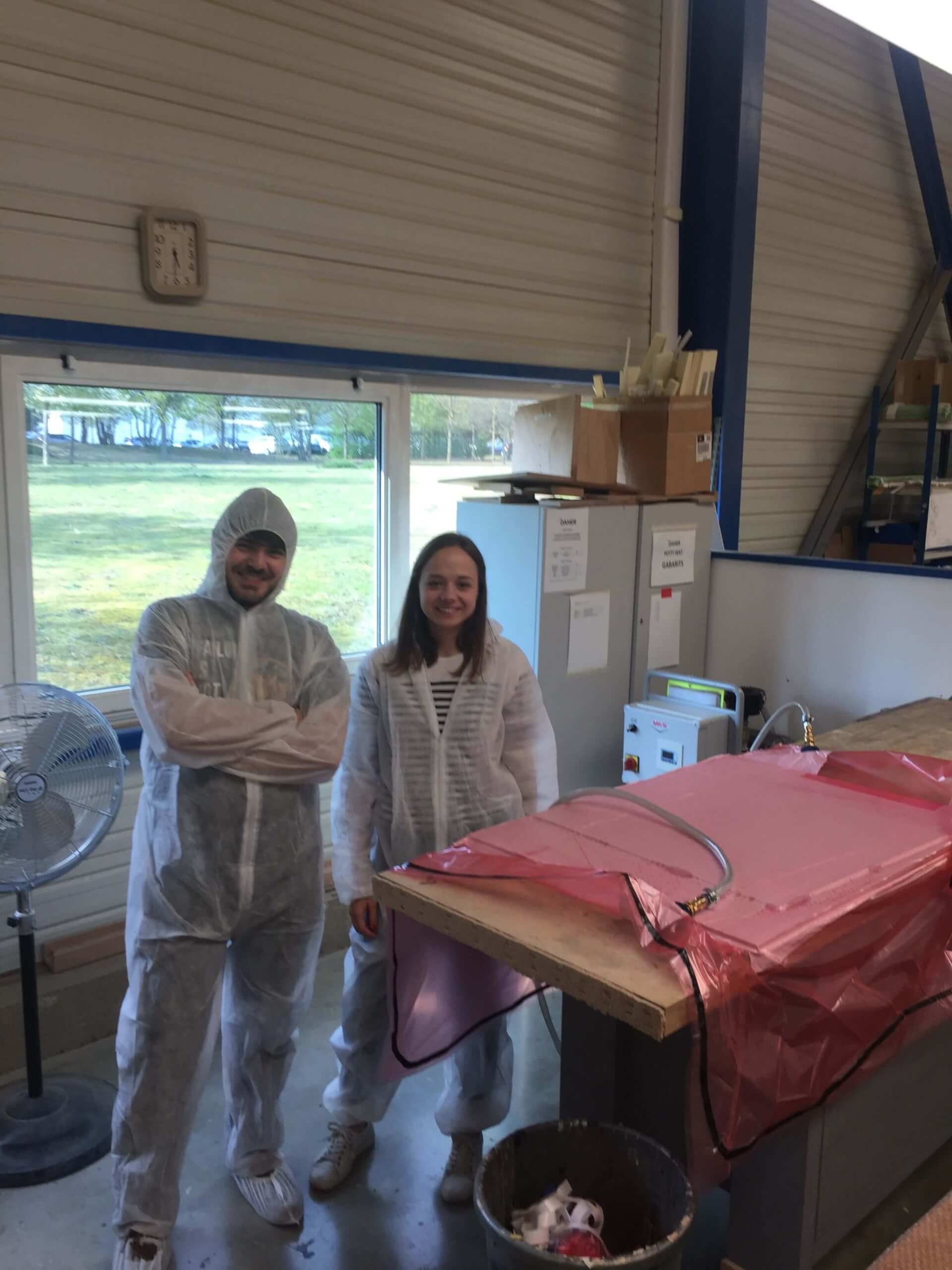
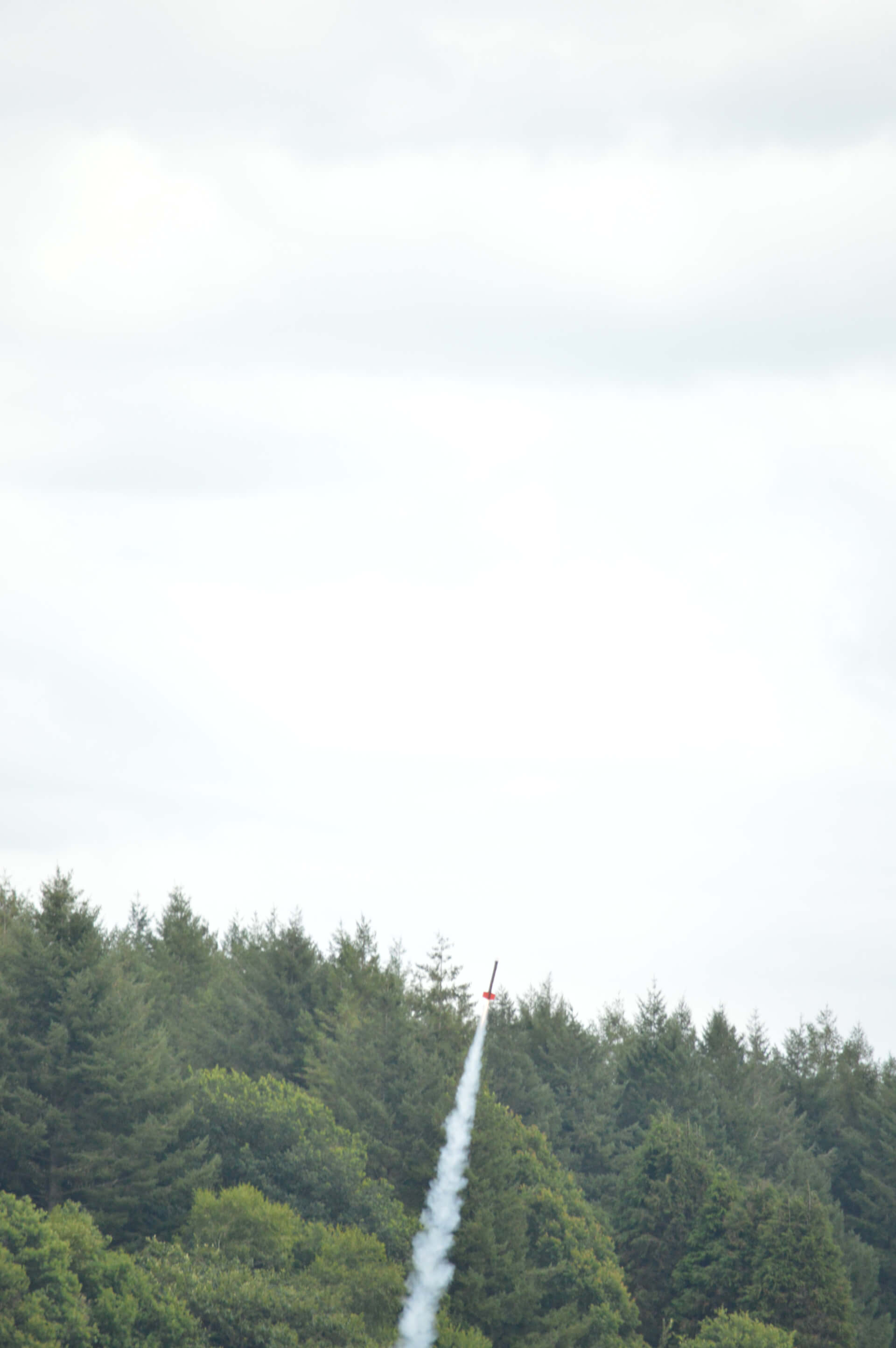
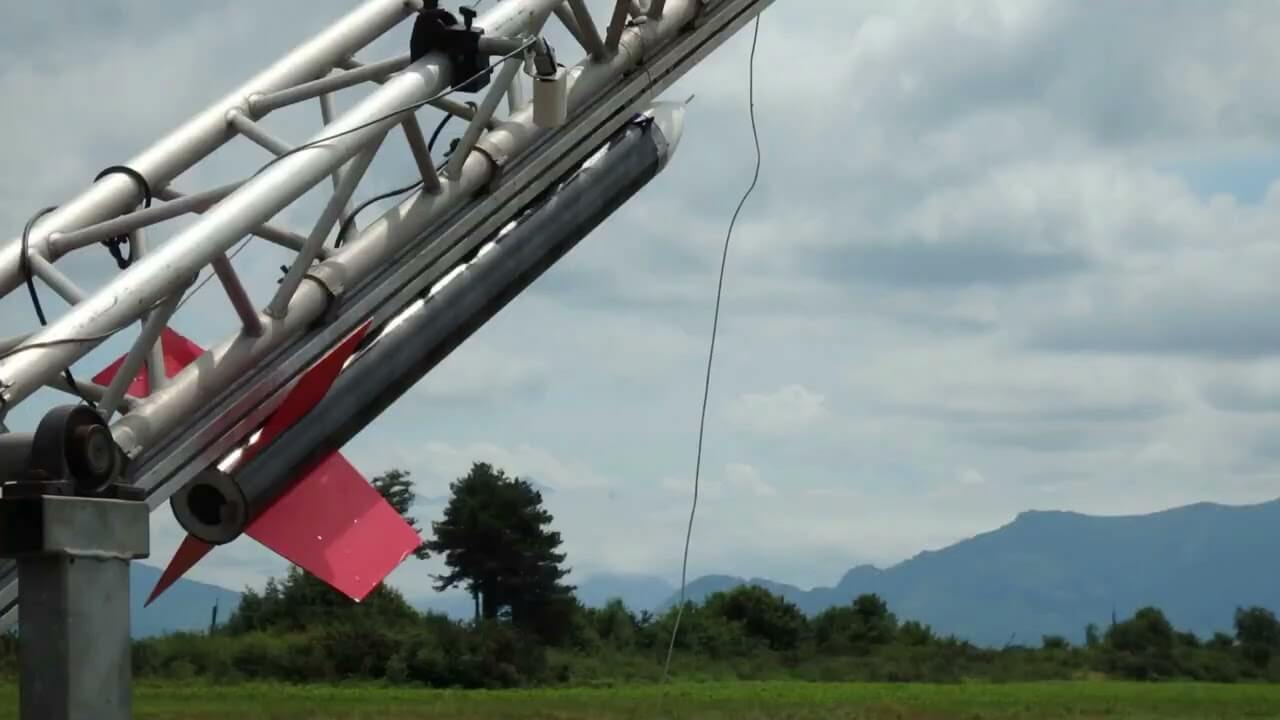
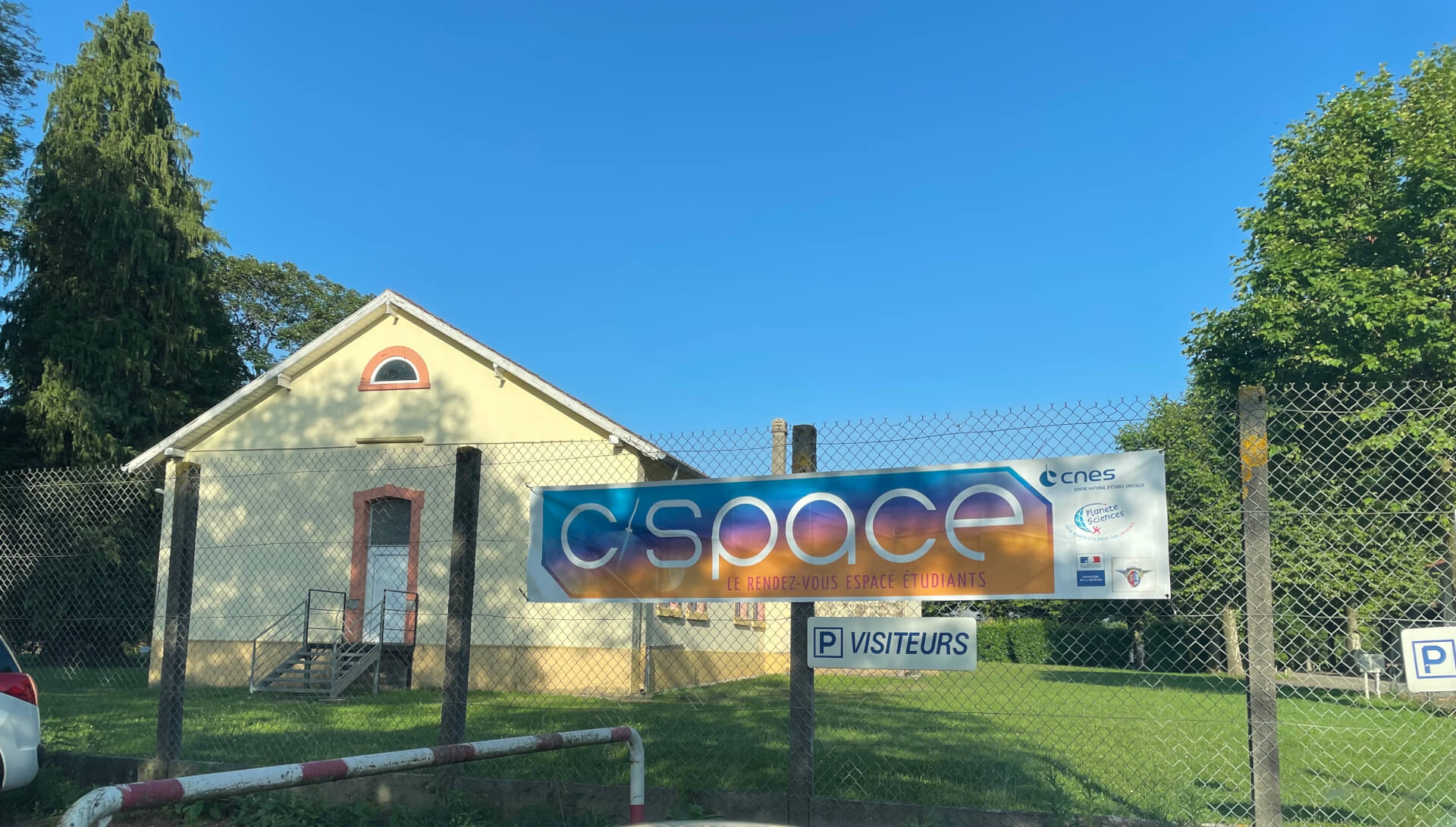
The idea was to build a rocket that could go through a stable flight with a full functional recovery. As a result, our main challenges were to build a reliable recovery system, as well as the studies of flight stability, aileron aeroelasticity, and the effects of vibration on the rocket. We also had to conduct a series of experiments allowing the acquisition of diverse data on pressure and temperature at a given altitude. Participants were able to conduct this project with the help of a launch campaign organized by our sponsor Planète Sciences, which is a branch of a larger organization by the name of CNES (Centre National d’Etudes Spatiales), which helps students in rocket modelization. Two teams were used for conception: a mechanics team under the supervision of Alesia Herasimenka and an electronics team under that of Luc Bruchet, two master's students studying Robotics and Advanced Systems at Sorbonne Université. This project was completed by a team of around ten students of all levels and was finally finished after 9 months of work, with help of Planète Sciences. In the end, the rocket had a nominal flight during C'Space 2019, reaching an altitude of 1600m and a maximum speed of 700 km/h.
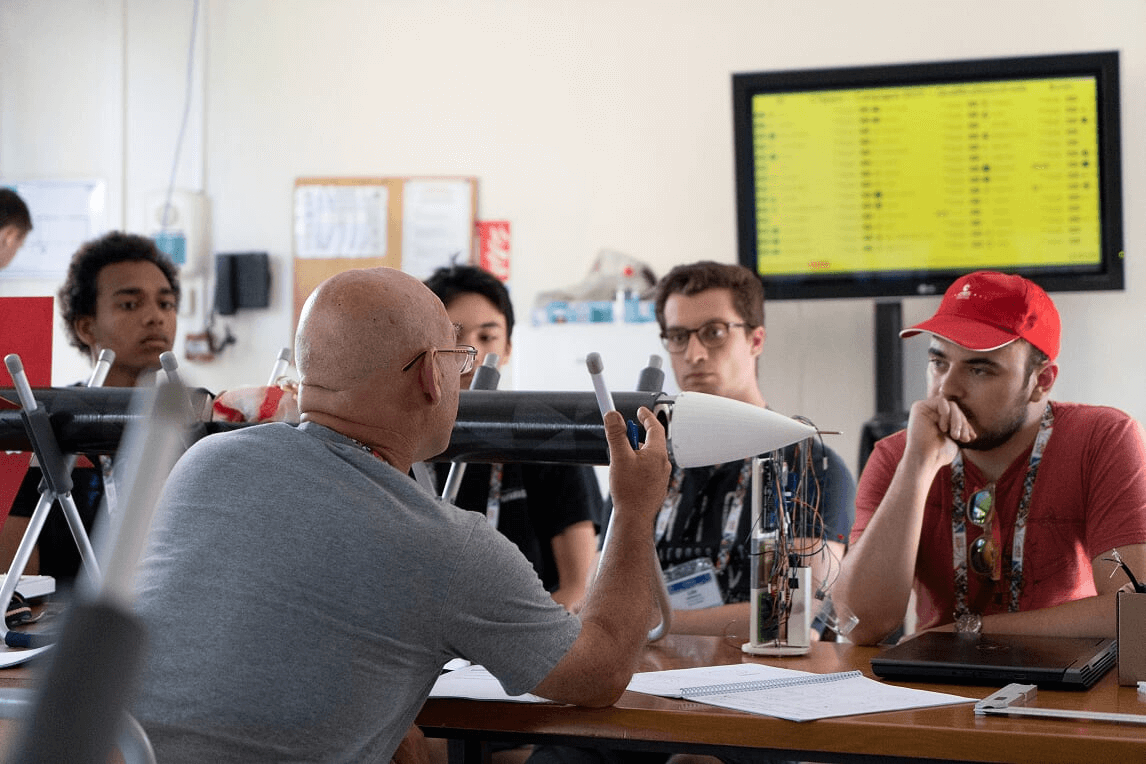
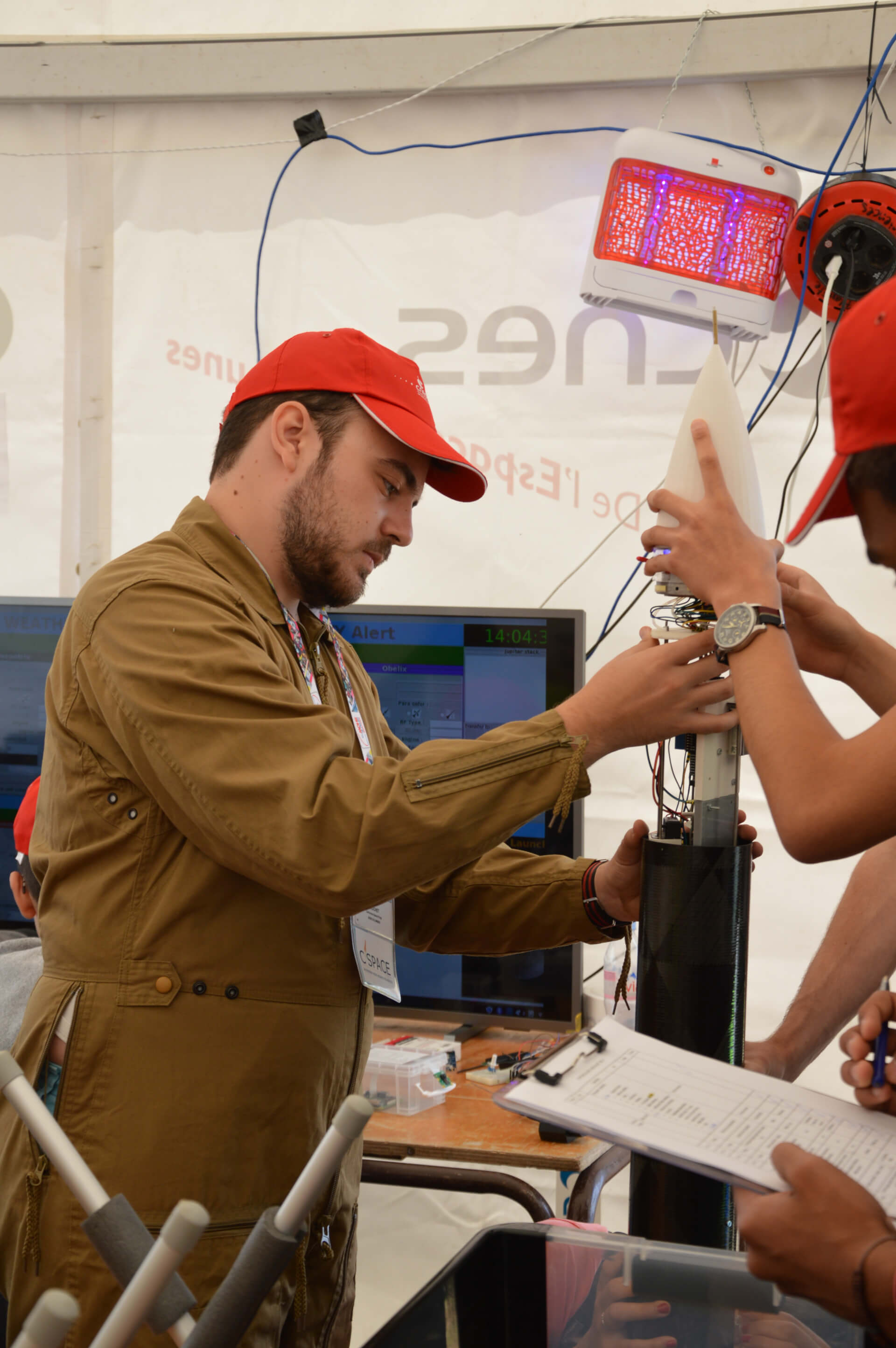
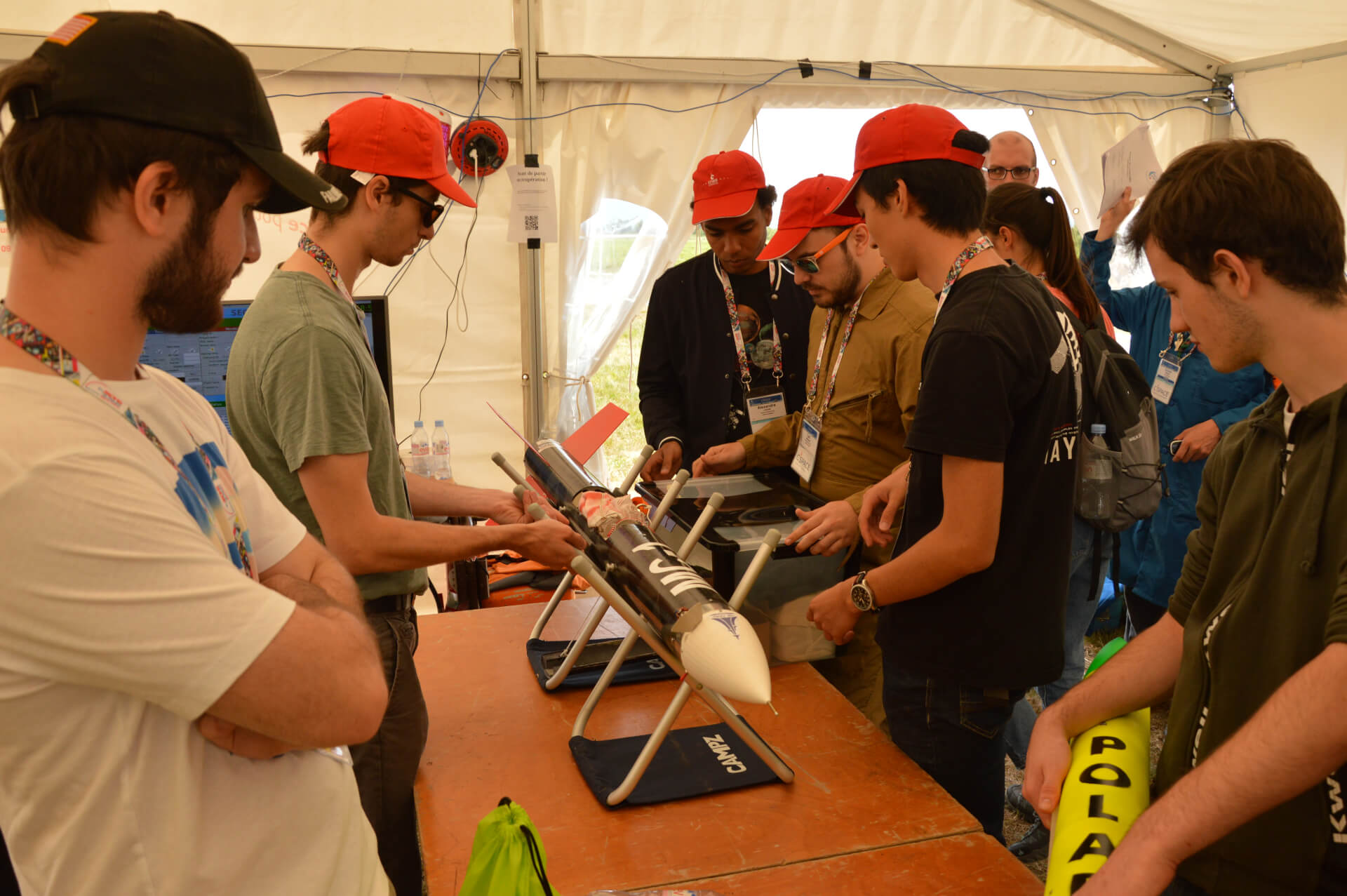
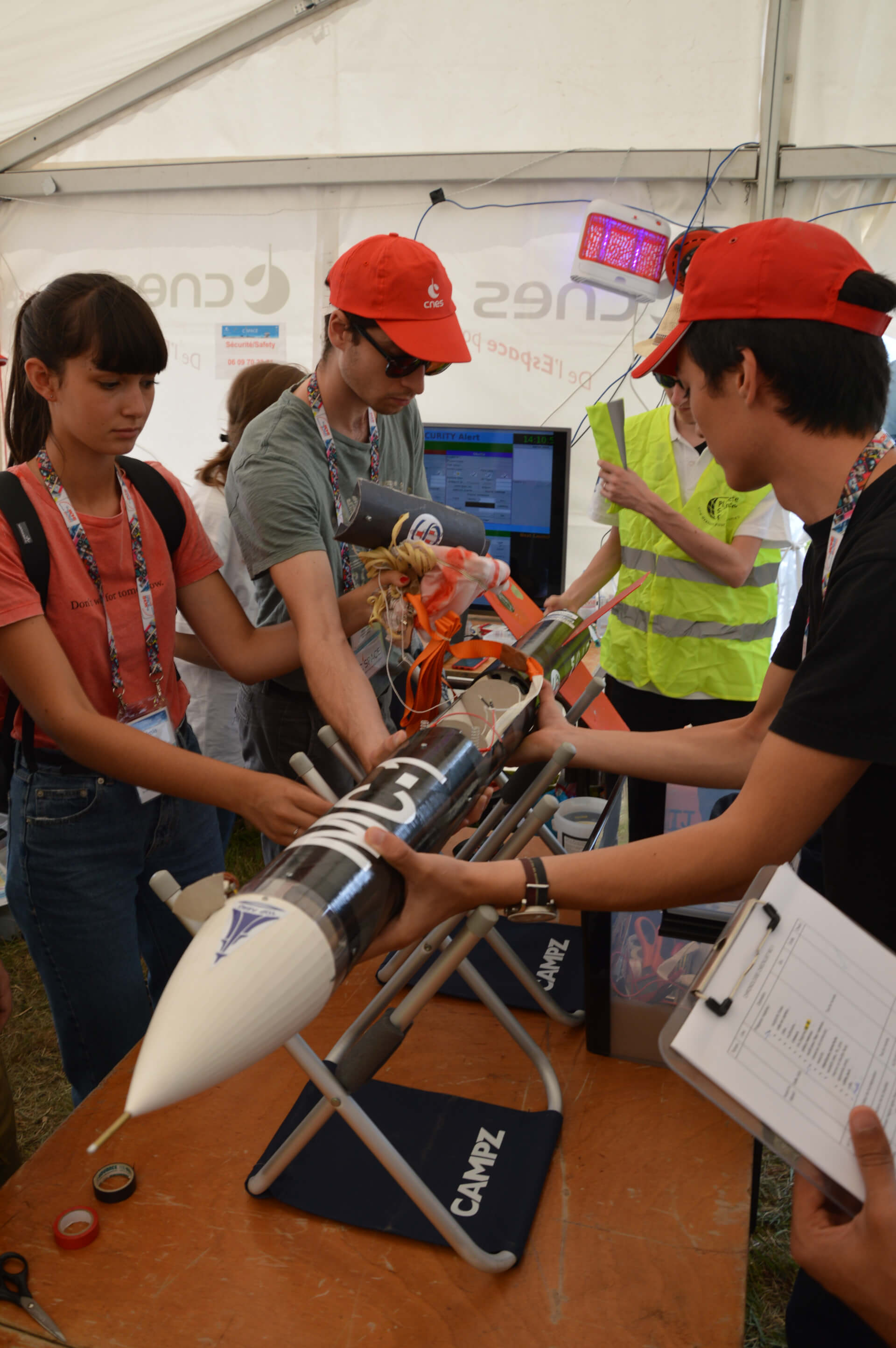
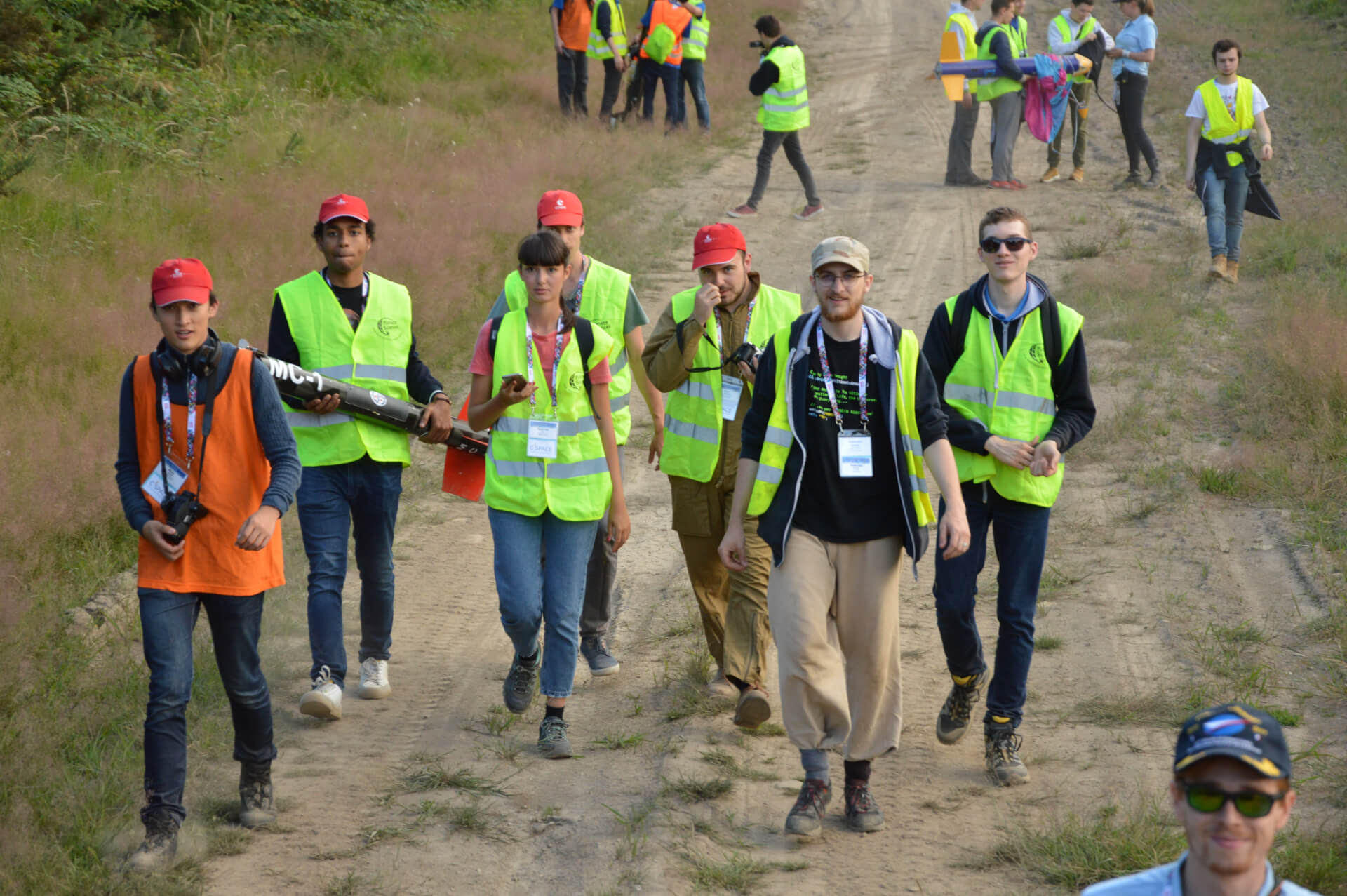
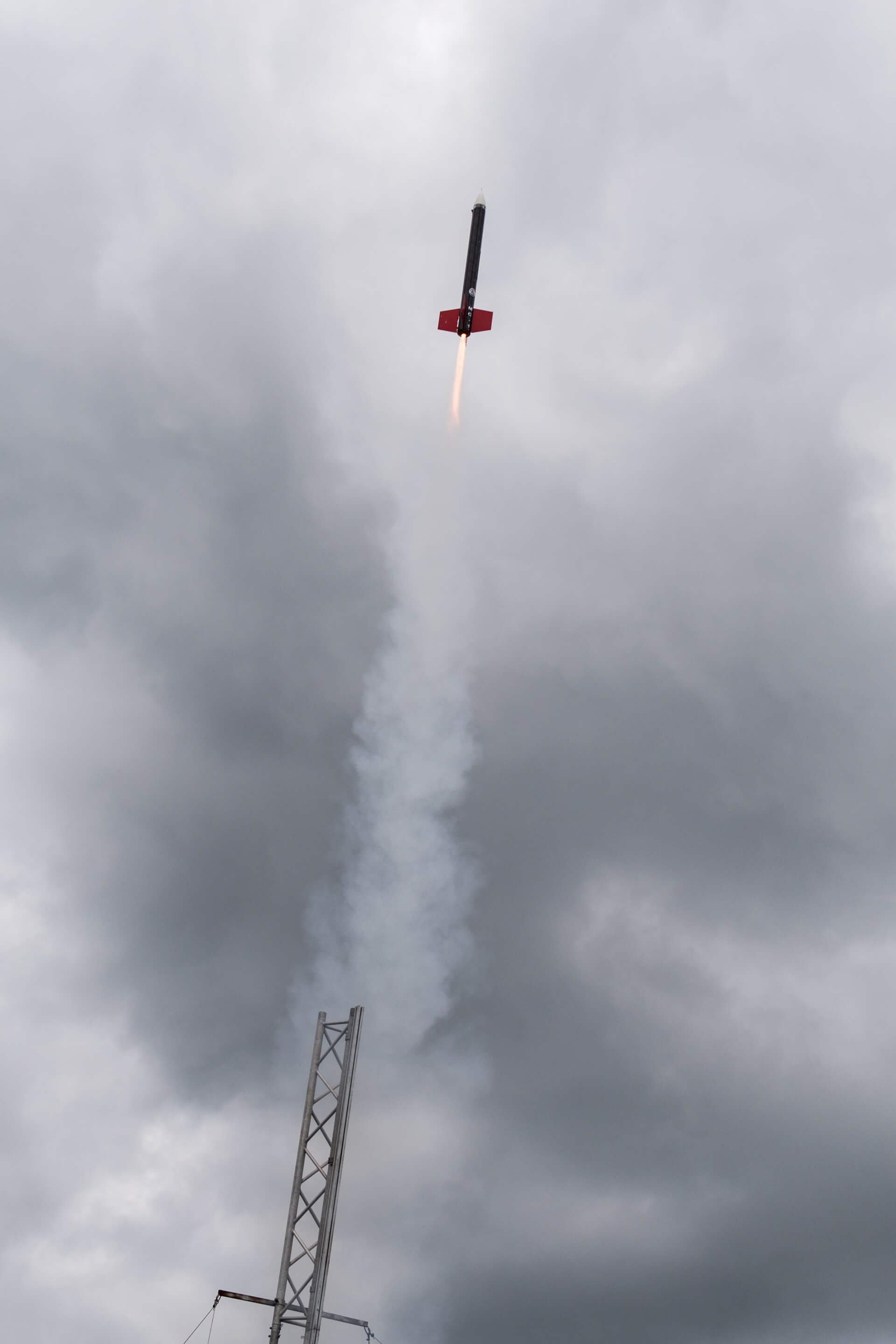
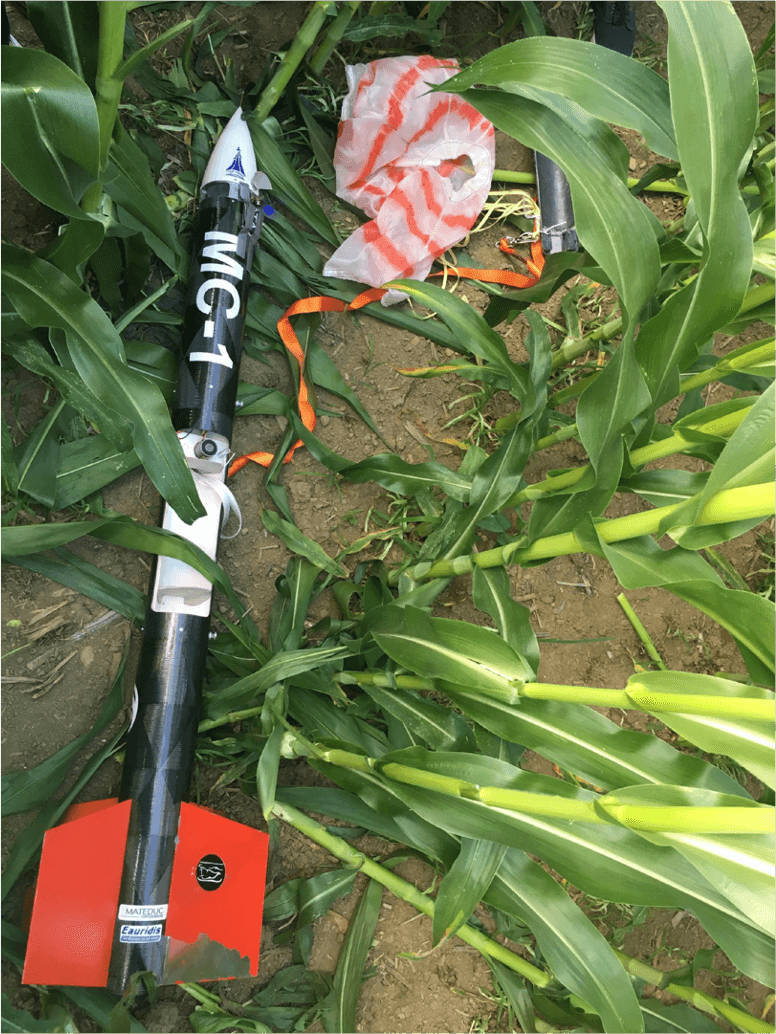
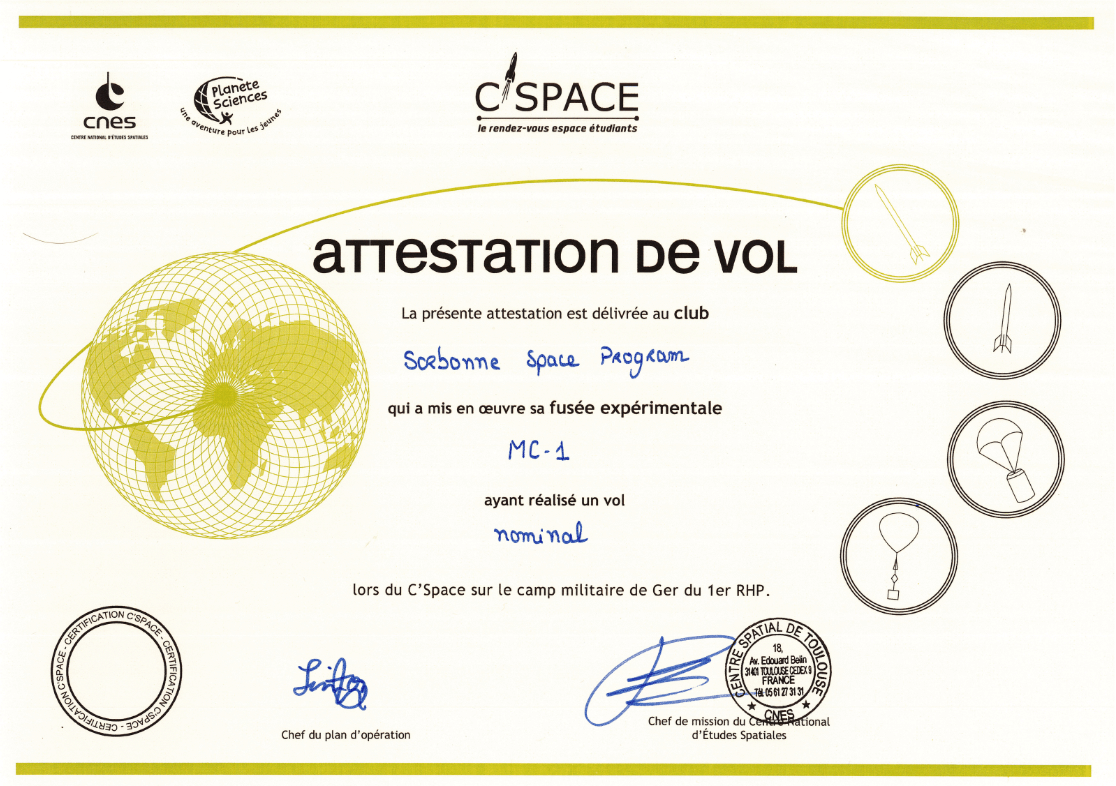
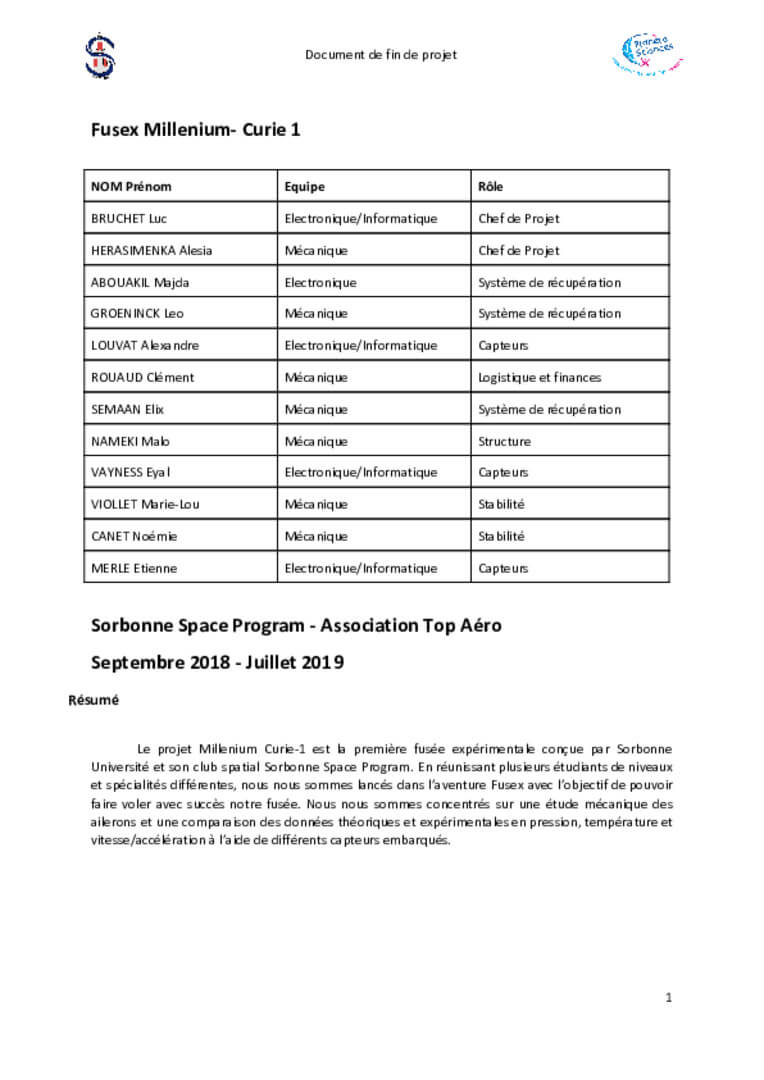
This project was awarded the prize for the Best experimental rocket C’Space 2019 awarded by the CNES and the Space & Industry Prize awarded by GIFAS, the former, a competition in which 25 teams participated, and the latter, 15 teams.
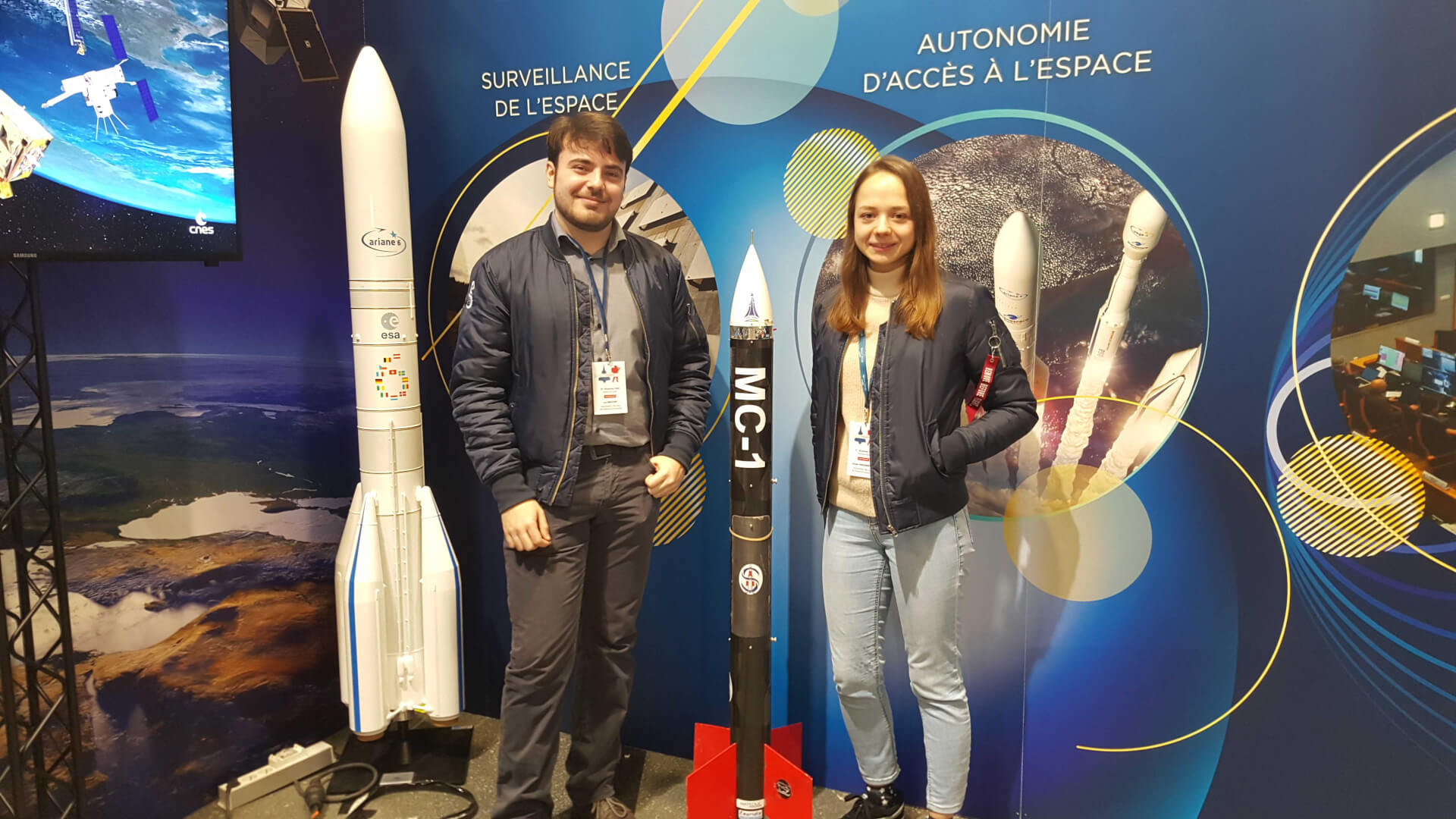
Now that the project is complete, we present the rocket for scientific mediation at events. For example, we used the rocket to introduce the principles of flight in a simplified manner to younger generations during the 2019 Science Festival at Sorbonne Université. We also aim to participate in space-themed events to present our initiative. In particular, we participated in La Fabrique Défense, presenting on the CNES stand, a gathering to discuss Defense and Space professions, in January 2020.
MC-1 Launch - C'Space 2019
MC-1 however is only the first in a series of rockets! From 2019 to 2021 one of our teams worked on MC-2, and two others are currently working on Zéphyr and AtlaSIX, which should have flown during C'Space 2022, but unfortunately due to technical difficulties did not make the qualification.
A project report is also available on the CNES website.